Stigma makes people look away
Cues that a health issue carries stigma make people avoid information about it.
Earl, Nisson & Albarracín, 2015In noomaNotifications say “9pm check-in”. Never the medicine.
 Our own product · Health
Getting the download is easy. Getting someone back tomorrow, on a bad day, is the whole game. nooma is a pill reminder built on habit psychology: a tiny pet who heads off on an adventure every time you take your meds, and never punishes a bad day.
People know they should take their meds. Missed doses aren't a memory problem, they're a feelings problem. And most apps make the feelings worse.
Every time you take it, it says "something's wrong with you". The brain learns to dodge that feeling, and the habit goes with it.
Miss a day, lose the streak, and the app turns into a record of failure. Psychologists call it the "what the hell" effect: once the rule is broken, people drop it altogether. That's the day the app gets deleted.
The same checkmark, every day. The brain stops noticing it fast, so there's nothing pulling you back on the days you don't feel like it.
We went through every pill reminder we could find. Same pattern every time. Red warnings, checklists and streaks that punish you for having a bad week. They're designed to be obeyed, not to be wanted.
So we started from the psychology instead.
Every feature in nooma traces back to research on habits, motivation and how people treat themselves when they slip.
Cues that a health issue carries stigma make people avoid information about it.
Earl, Nisson & Albarracín, 2015In noomaNotifications say “9pm check-in”. Never the medicine.
People went to the gym far more often when their favourite audiobook was only available there.
Milkman, Minson & Volpp, 2014In noomaTaking your meds is the only way to send her exploring.
A small gap in what we know creates a pull to close it. Not knowing beats knowing.
Loewenstein, 1994In noomaYou never know what she'll bring back.
After a setback, people encouraged to go easy on themselves kept trying for longer than people given a pep talk.
Breines & Chen, 2012In noomaMiss a day and she isn't cross with you.
New habits took around 66 days to form, and missing a single day made no real difference to the outcome.
Lally et al., 2010In noomaTwo patches cover missed days, so one bad day never resets the run.
People value things more when they've put their own effort into them. It's called the IKEA effect.
Norton, Mochon & Ariely, 2012In noomaYou name her, and her world fills up with your finds.
Every habit has a nudge, an action and a payoff. Reminder apps get all three wrong, and then they get the bad day wrong too. We redesigned all four.
A reminder that shouts the name of your medication on the lock screen is a daily signal that something's wrong. Ours says “9pm check-in” and nothing else. Once, softly, privately. The fewer bad feelings around the moment, the less people avoid it.
Logging your meds is a single tap. No forms, no confirm screen. On a low day the bar has to be as low as it goes, because that's the day that decides whether the habit survives.
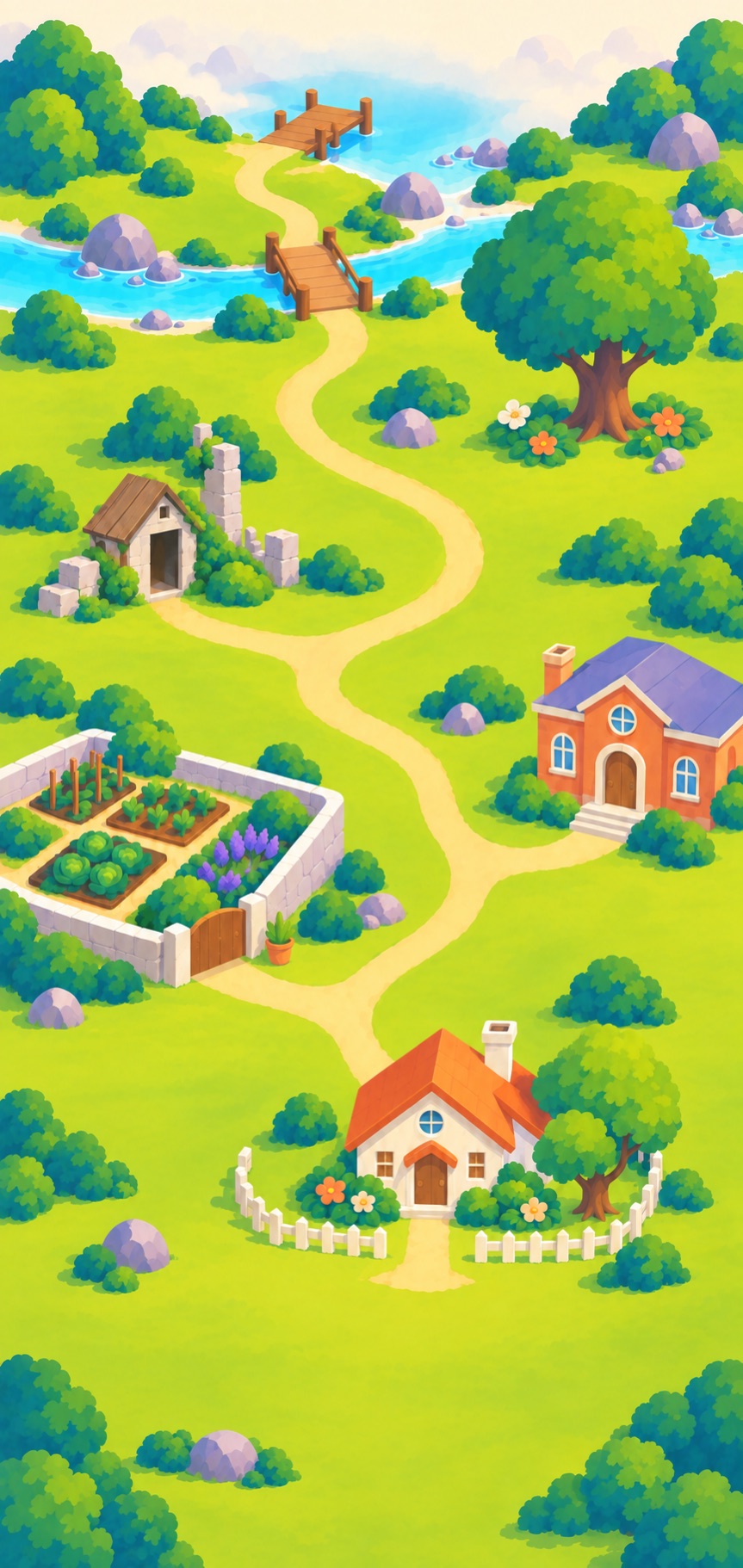
Every time you take your meds she heads off somewhere: the river, the meadow, the library, the ruins. She comes home with something to keep. A pressed flower, a paper crane, an old coin. A tick is the same every day. Not knowing what she'll find is what brings people back, and the pill comes along for the ride.
A run of days is motivating, so we kept the streak. We took out the punishment. She keeps two patches, and a missed day spends one automatically. No button, no guilt, the run carries on. A patch grows back every seven days. Going through something? Pause it and she keeps your spot warm.
It counts days you came by, not doses, so people on weekly or every-other-day meds never lose a run to their own prescription. And the milestones are handmade gifts, a froggy hat at day 7 and a poncho at day 14. Money doesn't buy them. Only showing up does.
48 days in a rowa patch covered yesterday · 1 leftYou can rename her, and most people do. Every find goes into her home, the map fills in as she explores, and a widget keeps her on your home screen even when the app is closed. The more you've put in, the less you want to walk away.
Nudge, tap, payoff. That's the whole loop. Tap the button and see what she brings back.
Reminders, multiple meds and refill tracking are free, for good. Nooma Plus sells hats, outfits and scenes for her. People pay because they love her, not to get their reminders back. That trust is part of why they stay.